

Description
Released on a limited edition DigiSleeve CD and on all digital platforms: 28 February 2025
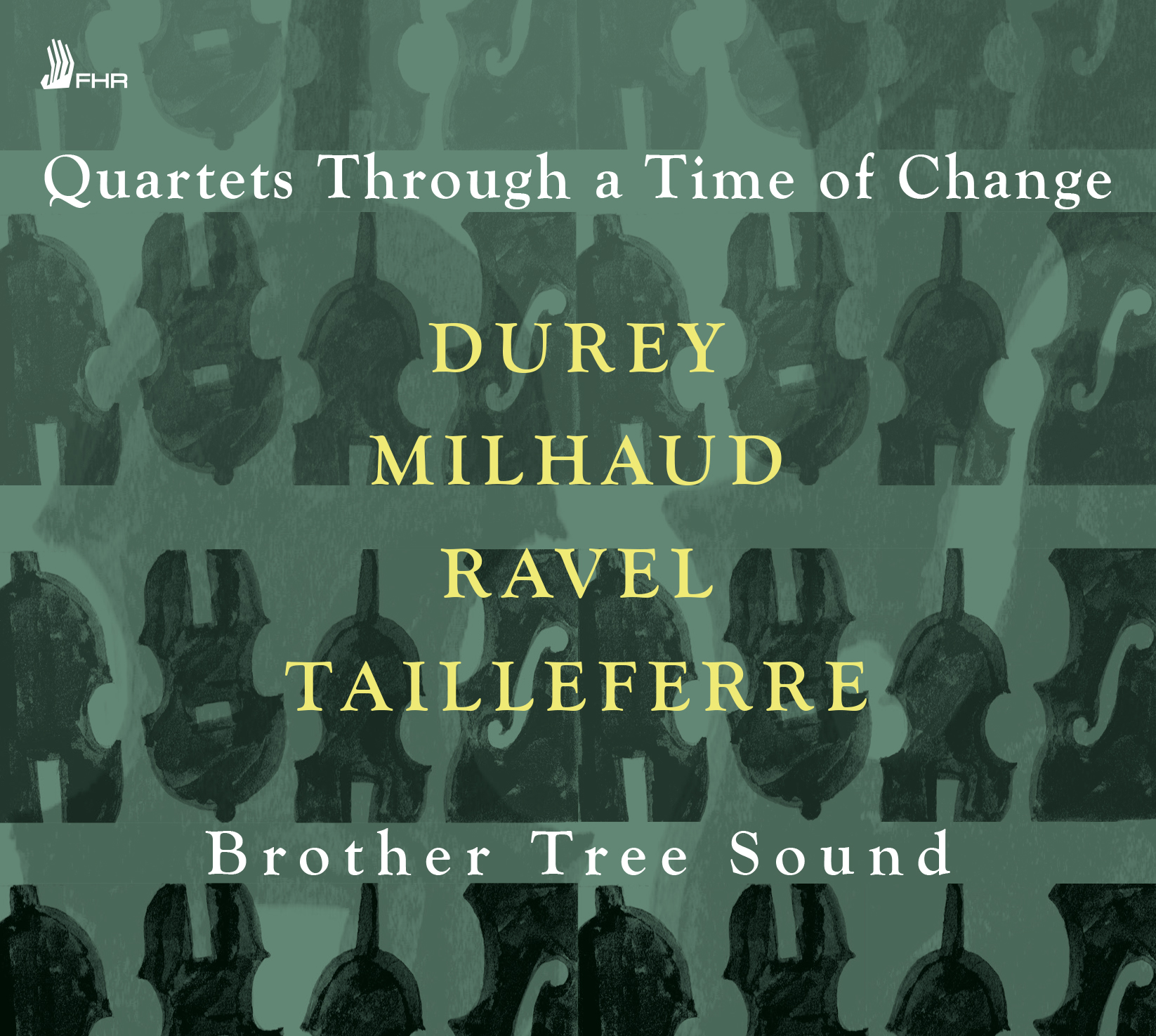
Quartets Through a Time of Change
Maurice RAVEL (1875–1937)
1–4. String Quartet in F major (1903)
Louis DUREY (1888–1979)
5–8. String Quartet No. 1, Op. 10 (1917)
Germaine TAILLEFERRE (1892–1983)
9–11. String Quartet (1917–19)
Darius MILHAUD (1892–1974)
12–14. String Quartet No. 4, Op. 46 (1918)
Brother Tree Sound
Anna de Bruin, Thea Spiers violin
Peter Mallinson viola
Julia Graham cello
Recorded at St John the Baptist, Little Missenden, UK,
9–10 November 2022 (Milhaud, Tailleferre), 12 June 2023 (Ravel, Tailleferre)
and 19 December 2023 (Durey and Ravel)
Recorded, edited and produced by John Croft (Chiaro Audio)
24bit, 96kHz high resolution recording, editing and mastering
A surround sound with Dolby Atmos mix of this recording is also available on many streaming services. Dolby Atmos mix by John Croft
Press Quotes
‘Brother Tree Sound’s playing is vivid and intense [Ravel]… It is [Tailleferre], like the Durey, extremely charming, with a Parisian insouciance that I really like… terrific disc’ (The Arts Desk)
‘An imaginative selection of French string quartets – With fine attentive performances and a recording and documentation to match, this is a creative disc that also pays homage to the 150th anniversary of Ravel’s birth’ (MusicWeb International)
‘All in all a program that well captures and conveys the unease and disquiet of the times, played with utter conviction by an ensemble to follow.’ (Classical Music Sentinel)
‘…I love Brother Tree Sound’s earthy approach to Ravel’s String Quartet here…. all performed with a similarly unfettered passion and sense of forward momentum.’ (**** BBC Music Magazine)
‘The playing of the Brother Tree Sound quartet is very attractive, clear and beautifully integrated… this is a wonderful disc of little-known music from the first part of the twentieth century.’ (AUSTA National Journal)